

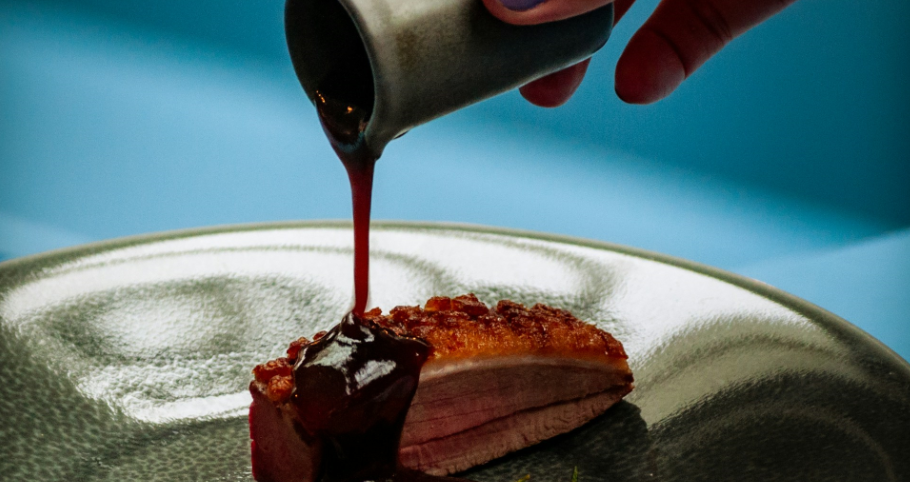
From the bright red of ketchup to the brown of soy sauce, from the orange-red of chili sauce to the creamy white of salad dressing—sauces are an indispensable flavor element on Chinese dining tables, and color is the first impression a sauce makes on consumers. In the past, these colors mostly came from artificial synthetic pigments; now, a "base color revolution" is quietly unfolding in the sauce industry. Natural plant pigments, derived from plants, fruits, and microorganisms, are giving soy sauce, ketchup, chili sauce, salad dressing, and other sauces natural, safe, and appetizing colors.
The "Pigment Revolution" in the Sauce Industry
Sauces are a crucial application area for natural pigments. The global market for natural food colorings continues to grow, projected to reach $6.27 billion by 2033. Sauces and condiments, as one of the important application areas for natural pigments, are experiencing rapid growth. It is worth noting that American consumers particularly value the application of natural pigments in sauces and condiments—surveys show that American consumers consider it more important for sauces and condiments to have more naturally derived pigments than other products. Behind this trend lies consumers' extreme pursuit of "clean labels." Approximately 70% of global consumers explicitly stated that they prefer products labeled "contains natural colorings," "colorings derived from nature," or "colorings extracted from fruits and vegetables." In the sauce sector, consumers are particularly scrutinizing ingredient lists—they want to know whether that red hue comes from beetroot or is chemically synthesized, and whether that brown hue comes from caramel or artificial dyes. About 60% of consumers are willing to pay a 5% premium for products using natural colorings.
Meanwhile, global regulatory policies continue to tighten. In 2025, the US FDA announced plans to phase out eight petroleum-based synthetic colorings, including Allura Red and Tartrazine. Global food giants have responded—Kraft Heinz announced it would completely remove synthetic colorings from its US products by the end of 2027; currently, nearly 90% of its US products are free of synthetic colorings. PepsiCo, Tyson Foods, and others have also announced the phasing out of synthetic colorings. Driven by both stricter regulations and consumption upgrades, natural pigments have transitioned from an "optional" to a "must-have" in the sauce industry.
Common Natural Plant Pigments in Sauces
Sauces come in a wide variety of types, each with different pigment requirements. Here are some widely used natural plant pigments in sauces:
Brown Series: Caramel Color
Caramel color (commonly known as soy sauce color) is a natural coloring agent produced by caramelizing sugar when heated to 170°C. It is the most widely used of all edible natural pigments, extensively used in soy sauce, vinegar, cooking wine, and braised products. Depending on the processing method, caramel color can be produced in a range of colors from brownish-black to golden-red. Hengtai caramel color uses a precise temperature-controlled reaction process to meet the needs of different sauces such as light soy sauce, dark soy sauce, and fermented bean paste. In soy sauce, caramel color not only gives the product a bright reddish-brown color but also reflects the unique reddish-brown color of fermented soy sauce.
Red Pigments: Red Yeast Rice Red, Chili Red, Sorghum Red
Red Yeast Rice Red is a traditional natural pigment produced by the fermentation of Monascus purpureus. It is made primarily from rice and soybeans through liquid fermentation, extraction, and refining. Red Yeast Rice Red is widely used for coloring sausages, seasonings, fermented bean curd, etc. In the sauce industry, it is a common choice for coloring tomato sauce and non-oil-based chili sauces, typically used at 0.1%-0.15%. Red Yeast Rice Red pigment has good water solubility and excellent coloring properties.
Chili Red is a natural red pigment extracted from mature red chili peppers, belonging to the carotenoid pigment class. Chili Red is expensive, has strong coloring power, and good color retention. Oil-soluble chili Red pigment can be used in chili oil and oil-based chili sauces, producing a natural golden yellow color, at a dosage of 0.08%-0.1%. Chili Red can be used in sauces, cooked meat products, candies, etc., used in appropriate amounts according to production needs.
Sorghum Red is extracted from the outer pericarp of dark purple or brown sorghum seeds and has good stability to light and heat. Sorghum red is widely used as a food additive for coloring sauces and blended wines.
Yellow Series: Turmeric, Gardenia Yellow
Curcumin, derived from turmeric rhizomes, is bright yellow and mainly used in curry powder, pickles, and sauces. In compound seasonings, the curcumin content is limited to no more than 0.1g/kg according to national standards. Curcumin is widely used in puffed seasonings, hot pot sauces, and other compound seasonings to give them a purer color and unique luster. Curcumin has strong coloring power, bright color, strong thermal stability, and is safe and non-toxic.
Gardenia Yellow is extracted from gardenia fruit, has good water solubility, and strong heat resistance. Gardenia Yellow can be used for coloring seasonings such as soy sauce and vinegar, and is also widely used in jams and other condiments.
Other Natural Pigments
In addition, annatto (Annardo) can be used for coloring salad dressings; beet red can be used for red coloring in some sauces; β-carotene provides a natural orange-yellow color and is suitable for various sauces. Technical Challenges and Solutions The application of natural plant pigments in sauces is not without challenges, mainly in the following aspects:
Challenge 1: Thermal and Light Stability. Sauce processing often involves high-temperature sterilization and filling processes. Some natural pigments are prone to fading or discoloration under high temperatures and light. For example, red yeast rice pigment is sensitive to environmental conditions such as light and heat, exhibiting poor stability. Capsicum red pigment faces similar issues.
Solution: Microencapsulation technology is one of the most effective methods. By encapsulating natural pigments in protective wall materials, their thermal and light stability can be significantly improved. Furthermore, technologies such as antioxidant-polysaccharide complexation and emulsion system construction can also effectively enhance the stability of pigments in sauces. A patent has disclosed a salad dressing and its preparation method for improving the stability of natural pigments, constructing multiple lines of defense including anti-oxidation, system stability, and preservation through the synergistic effect between various components.
Challenge 2: Complexity of Sauce Systems. Different sauces vary greatly in pH value, oil content, salt content, etc., posing different requirements for pigment stability. For example, anthocyanin pigments exhibit different colors under different pH conditions, limiting their application in sauces; the compatibility of oil-soluble pigments with water-based sauces is also a challenge.
Solution: This is addressed through selective pigment blending and process adjustments. Oil-based chili sauces use oil-soluble capsicum red pigments, while non-oil-based chili sauces and tomato sauces use water-soluble capsicum red pigments or red yeast rice. Customizing pigment solutions for different sauce systems has become an industry trend. Blending is also a common strategy—for example, soy sauce-specific pigments can be blended from 90% caramel color and 10% red yeast rice solution.
Challenge Three: Flavor Interference. Some natural pigments have distinctive odors that may affect the flavor profile of sauces.
Solution: Removing impurities and off-flavor components through refining processes. Taking caramel color as an example, a precisely temperature-controlled reaction process is used to remove impurities, imparting only natural color without interfering with the original flavor of the condiments.
Natural Pigments Are Taking Root in the Sauce Industry
More and more sauce brands are embracing natural pigments.
Kraft Heinz is a prime example in the global sauce industry. This ketchup giant announced it will completely remove artificial colorings from its U.S. products by the end of 2027. Notably, its signature Heinz ketchup has never used artificial colorings. Currently, nearly 90% of Kraft Heinz's U.S. products are free of artificial colorings.
These cases demonstrate that the application of natural colorings in sauces has moved from a "concept" to a "product," and from a "niche" to a "mass market."
Let every bite of sauce "play its natural color"
From the brown of caramel to the crimson of red yeast rice, from the bright yellow of turmeric to the orange-red of chili red—nature provides the sauce industry with a rich and safe palette of colors.
Driven by rising consumer health awareness, stricter regulatory policies, and breakthroughs in technological innovation, natural plant colorings are moving from "alternatives" to "preferred solutions" in the sauce industry. For sauce companies, embracing natural colorings is not only a choice to meet consumer needs but also a strategic direction to enhance product value and build brand trust.
Let the brown color of soy sauce come from caramel, the bright red of tomato sauce from red yeast rice, and the orange-red of chili sauce from chili peppers—let every bite of sauce be "authentic".