

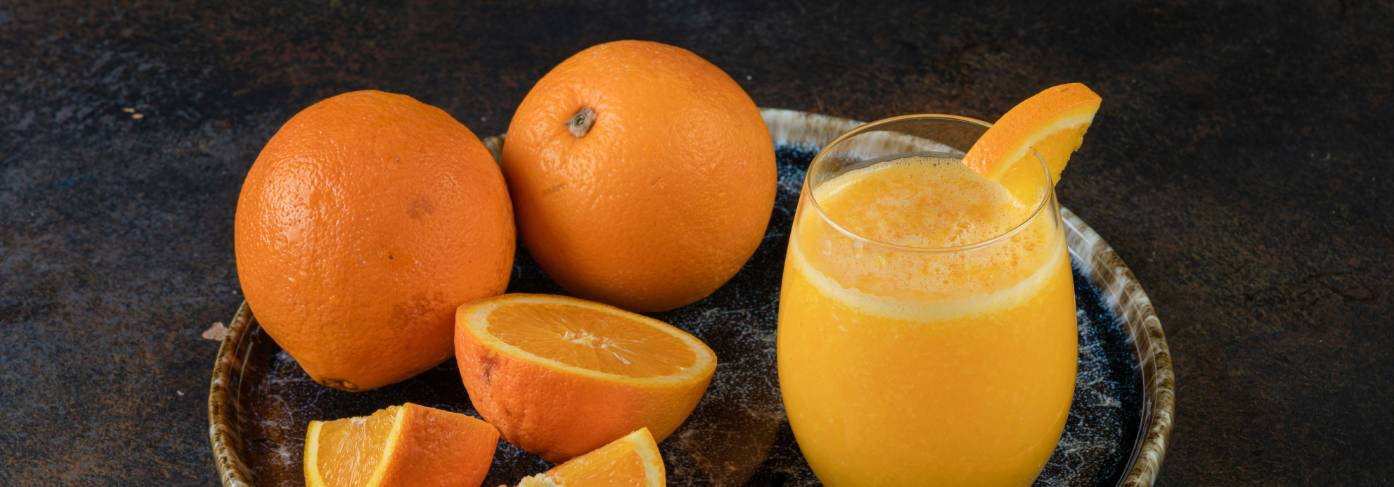
When consumers pick up a bottle of beverage, the first thing that catches their eye is often its color—red evokes the sweetness of strawberries, orange recalls the freshness of oranges, and purple conveys the richness of berries. Color is the first language through which beverages communicate with consumers.
However, for the past few decades, this language has been largely written by artificially synthesized pigments. Now, a profound transformation is underway—natural plant pigments are moving from a "niche choice" to "industry mainstream," redefining the color aesthetics of beverages. The golden hue extracted from turmeric, the blue-green from spirulina, the purplish-red extracted from purple sweet potatoes… these names derived from the plants themselves are becoming "color codes" that consumers can understand and trace.
Natural Pigments Usher in a Golden Age
The global natural food coloring market is experiencing robust growth. According to market research data, the global natural food coloring market size is estimated at $2.2 billion to $2.5 billion in 2025 and is projected to reach $3.5 billion to $4.7 billion by 2034. Beverages are the largest application area, accounting for approximately 38.8% of market demand. The growth of the natural color beverage segment is particularly rapid. The global natural color beverage market was valued at approximately $1.5 billion in 2025 and is projected to grow to $4.1 billion by 2034, representing a CAGR of 11.8%. In new food and beverage product launches, the use of natural colorants increased by 9% between 2021 and 2025, with soft drinks being the fastest-growing category in terms of natural colorant adoption.
70% of consumers are willing to pay for “natural colorants”
Consumer preference for natural colorants is rapidly evolving. According to a consumer insights report released by Kalsec, a leading global food ingredients company, approximately 70% of global consumers explicitly stated that they are more willing to use plant-derived colorants in products compared to a year ago. On average, 70% of global consumers are more willing to buy products that explicitly state “contains natural colorants,” “colorants derived from nature,” or “colorants extracted from fruits and vegetables.”
It is worth noting that today's consumers are no longer satisfied with simple “no additives” claims. When they pick up a product, the first thing they do is flip it over and look for the truth in the ingredient list. Consumers want to know where colors "come from"—the red of beetroot, the yellow of turmeric, the green of spirulina—and these specific, traceable plant-derived names are becoming key to winning consumer trust.
Regulatory Drive: Global Accelerated Phasing Out of Artificial Colors
**In the US**, the FDA announced in January 2025 the revocation of authorization for the use of Red 3 dye in food and ingestible drugs, with the food use ban taking effect in January 2027. In April 2025, the FDA further announced plans to phase out eight petroleum-based synthetic colorants, including Allura Red, Tartrazine, Sunset Yellow, and Brilliant Blue. Driven by the Make America Healthy Again (MAHA) initiative, the US government continues to push the food industry to replace petroleum-based artificial colorants with natural ones.
**The EU** has implemented strict EFSA regulations and labeling requirements, mandating warning information on beverages containing certain azo dyes, pushing companies to switch to natural alternatives.
**China** uses the National Food Safety Standard for the Use of Food Additives (GB 2760) as its core, clearly listing the permitted types of colorants, their scope of use, and maximum usage. Currently, my country has approved the use of 48 kinds of natural food colorings.
Common Types of Natural Plant Pigments in Beverages
Red Series
- **Beetroot Red**: Extracted from red beets, it provides a bright red to purplish-red color and is suitable for fruit juices, flavored beverages, etc. Note that beetroot red has relatively poor heat resistance.
- **Cochineal Red**: Derived from cochineal insects, it has stable color and good heat and light resistance, and is widely used in formulated wines, fruit juices, etc.
- **Red Yeast Red**: Produced by fermentation of Monascus purpureus, it is a traditional Chinese natural coloring and can be used in various categories such as fruit and vegetable juices, protein drinks, and carbonated beverages.
Orange-Yellow Series
- **β-Carotene**: The most representative carotenoid, it provides a natural orange-yellow color and has strong heat resistance. Suitable for flavored water, sparkling drinks, energy drinks, fruit juices, and dairy drinks. It requires emulsification before use in water-based products.
- **Gardenia Yellow**: Extracted from gardenia fruit, it has good water solubility and a natural color, and can be used in fruit juices, formulated wines, etc. - **Turmeric**: Extracted from turmeric rhizomes, providing a bright yellow color, suitable for functional beverages, plant-based drinks, etc.
Blue and Green Series
- **Phycocyanin (Spirulina Extract)**: A natural blue pigment extracted from spirulina, primarily used in beverages. In 2025, the FDA approved Galdieria blue extracted from red microalgae as a novel natural blue pigment.
- **Chlorophyll**: Extracted from plants, providing a natural green color, suitable for fruit and vegetable juices, etc.
Purple Series
- **Purple Sweet Potato Pigment** (Anthocyanins): Extracted from purple sweet potatoes, providing a purplish-red hue, and also possessing antioxidant properties.
- **Grape Skin Red**: Anthocyanin pigment extracted from grape skins, suitable for acidic beverages.
Technical Challenges and Solutions
The application of natural plant pigments in beverages is not without challenges. Compared to synthetic pigments, natural pigments have certain limitations in terms of stability:
**Challenge 1: Thermal Stability Issues.** Some natural pigments are prone to fading or discoloration during high-temperature sterilization. For example, beetroot red has poor heat resistance, and anthocyanin pigments are easily degraded during heat treatment.
**Solution**: Microencapsulation technology, encapsulating natural pigments in protective wall materials, can significantly improve their thermal stability. Studies have shown that microencapsulation using wall materials such as maltodextrin can effectively protect the stability of anthocyanins in carbonated beverages. Adding co-coloring agents such as tea polyphenols can also significantly improve the retention rate of pigments under sterilization conditions.
**Challenge Two: pH Sensitivity** Anthocyanin pigments exhibit different colors under different pH conditions, appearing red to purple in acidic environments and potentially turning blue or fading in neutral to alkaline environments.
**Solution**: For acidic beverages (such as juice and carbonated drinks), natural pigments such as anthocyanins, carmine, and safflower yellow are more suitable. In recent years, scientists have also been developing novel pH-stable natural pigments, such as butterfly pea flower extract, which exhibits a change from blue to purple at different pH levels.
**Challenge Three: Light Stability** Natural pigments are prone to photodegradation under light conditions, leading to fading. **Solution:** Using compounds such as unsaturated acids can effectively inhibit the fading of natural pigments under thermal stress. Adding specific amino acids (such as L-tryptophan) can also significantly extend the color half-life of anthocyanin pigments.
**Challenge Four: Supply Chain Fluctuations.** Natural pigments rely on agricultural raw materials and are greatly affected by factors such as climate, harvest, origin, and season.
**Solution:** Precision fermentation technology is becoming a new path to a stable supply of natural pigments. By designing microorganisms to produce specific pigment molecules during fermentation, it is not necessary to rely entirely on farmland cultivation and plant extraction. For example, the Portuguese raw material company GRA Nutra has launched natural β-carotene produced using non-GMO fermentation technology, suitable for various products such as flavored water, sparkling drinks, and energy drinks. The future natural pigment market is moving towards a new pattern of parallel development between "plant-derived" and "fermentation-derived" sources.
The Dual Value of Natural Pigments: Coloring and Function
The value of natural plant pigments goes far beyond "coloring." Many natural pigments themselves possess health functions, achieving the dual value of "coloring" and "nutrition."
- **Anthocyanins** (found in purple sweet potatoes, blueberries, grape skins, etc.) are powerful antioxidants, possessing the ability to scavenge free radicals and delay aging.
- **Carotenoids** (such as beta-carotene) are precursors to Vitamin A, helping to maintain healthy vision.
- **Phycocyanin** not only provides natural blue color but also possesses antioxidant and immunomodulatory bioactivities.
This dual value perfectly aligns with the current rapidly growing market trend of functional and health drinks. Consumers, while pursuing visual enjoyment, also want every sip of their beverage to be "understood and healthy."
Back to Nature, Embracing the Future
From the red of beetroot to the blue of spirulina, from the yellow of turmeric to the purple of sweet potatoes—nature has endowed the beverage industry with an inexhaustible treasure trove of colors.
Driven by rising consumer health awareness, stricter regulatory policies, and breakthroughs in technological innovation, natural plant pigments are transitioning from "alternatives" to "preferred solutions." For beverage brands, embracing natural pigments is not only a response to consumer demand but also a strategic choice for the future.
Using high-quality natural plant pigments is no longer an ingredient that needs to be "hidden" at the end of the ingredient list, but a product selling point worth loudly promoting—powerful proof of a brand's commitment to health, quality, and transparency.
Let the colors of beverages return to the names of the plants and fruits themselves. This is a gift from nature, and more importantly, it is the direction of the future.