

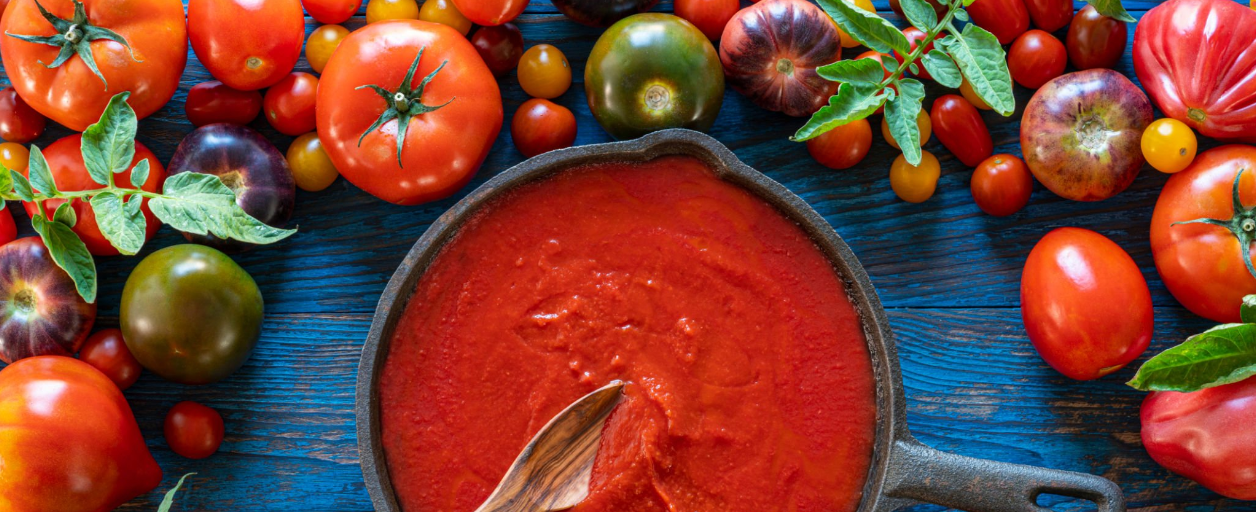
In the global pursuit of clean-label and functionally healthy foods, natural colors and nutritional enhancers are rapidly replacing their synthetic counterparts. Lycopene, a natural ingredient that combines vibrant color with excellent health benefits, is increasingly favored by food developers and has become a key technological factor driving product innovation.
Lycopene's Dual Value to the Food Industry: Color and Health
Lycopene, a bright red pigment belonging to the carotenoid family, is the primary pigment found in fruits such as tomatoes, watermelon, and guava. It is not only a colorant but also a highly potent antioxidant that has been extensively researched.
1. Excellent Health-Enhancing Properties
Powerful Antioxidant Activity: Lycopene is one of nature's most powerful singlet oxygen quenchers, with an antioxidant capacity over twice that of beta-carotene. This gives it enormous potential to help the body resist oxidative stress and delay cellular aging. Supporting Prostate Health: Numerous epidemiological studies and clinical trials have shown that lycopene intake is closely associated with a reduced risk of prostate cancer, making it a core functional ingredient in men's health foods.
Promoting Cardiovascular Health: Its antioxidant properties help reduce the oxidation of low-density lipoprotein cholesterol, thereby positively impacting cardiovascular health.
Boosting Immune Health and Skin Health: As a fat-soluble antioxidant, it protects cells from damage and may also contribute to skin health by filtering UV rays.
2. Natural Color Solutions
Vibrant Red Tones: Lycopene can impart vibrant, natural colors, ranging from bright yellow-red to deep red, to foods and beverages, perfectly meeting consumers' demand for "no artificial colors."
Clean Label Claims: Lycopene can be labeled "lycopene" or "natural color (lycopene)" in product ingredient lists, meeting market demands for clean, transparent labeling and significantly enhancing product appeal.
Technical Challenges and Solutions for Lycopene Applications in Food
Despite its promising prospects, lycopene's physical and chemical properties pose significant challenges for its application in food. Core technologies are designed to address these challenges.
1. Core Technological Challenges
Extremely Low Water Solubility and Chemical Instability: Lycopene is a highly hydrophobic, crystalline molecule that is virtually insoluble in water. This makes it difficult to use directly in water-based beverages and prone to precipitation and uneven distribution.
High Sensitivity to Light, Heat, and Oxygen: Lycopene's molecular structure contains multiple conjugated double bonds, making it susceptible to cis-trans isomerization (causing discoloration) and oxidative degradation (causing inactivation and the development of unpleasant flavors) when exposed to light, heat, and oxygen, severely impacting the shelf life and sensory quality of the product.
2. Solutions from Modern Food Technology
To overcome these challenges, food scientists have developed a variety of advanced formulation and encapsulation technologies:
Emulsion and Nanoemulsion Technologies: Lycopene is dissolved in an oil phase, then combined with an emulsifier (such as soy lecithin or gum arabic) and an aqueous phase, and then prepared into an oil-in-water emulsion using high-pressure homogenization or microfluidization. Nanoemulsions can significantly increase lycopene's apparent solubility in water, enhance its physical stability, and improve its bioavailability due to its extremely small particle size.
Microencapsulation: This is one of the most effective methods for protecting lycopene. Using techniques such as spray drying and freeze drying, a lycopene oil solution is encapsulated in a wall material (such as maltodextrin, modified starch, or gum arabic) to form micron-sized particles. This wall effectively isolates oxygen and light, significantly improving the stability of lycopene during storage and processing, and facilitating its mixing with powdered foods (such as milk powder, solid beverages, and seasoning powders).
Molecular encapsulation technology (cyclodextrin inclusion): Utilizing the unique cavity structure of cyclodextrin, lycopene molecules are encapsulated within it, forming a highly water-soluble inclusion complex. This method significantly improves its water solubility and stability.
Liposome encapsulation: Liposomes are formed using bilayer phospholipids to encapsulate lycopene within their hydrophobic layer. Liposomes offer excellent biocompatibility and targeted properties, simultaneously protecting lycopene and promoting its absorption.
Innovative Applications of Lycopene in Various Food Systems
Thanks to the advances in these technologies, lycopene has been successfully applied to a variety of food categories:
Beverages:
Applications: Functional water beverages, juice drinks, milk beverages, and plant protein beverages.
Technical Key: Lycopene is typically used in the form of an emulsion or nanoemulsion to ensure uniform dispersion and long-term stability in water. Care should be taken to protect the product from light (e.g., using dark bottles) and to add antioxidants (e.g., vitamin C and vitamin E) for synergistic protection.
Dairy Products and Fat Spreads:
Applications: Yogurt, processed cheese, ice cream, butter, and margarine.
Technical Key: Lycopene's fat solubility allows it to dissolve well in fat phases. In these products, it provides an attractive color and enhances their health properties. It can be used in either microencapsulated powder or oleoresin form.
Bakery and Confectionery:
Applications: Sandwich cookies, candy coatings, candies, and jelly candies. Technical Points: Microencapsulated powders are preferred due to their excellent flowability and high stability. They can withstand moderate temperatures encountered in baking and confectionery, but prolonged high-temperature processing should be avoided.
Meat Products:
Applications: Sausages, ham, and bacon.
Technical Points: Lycopene can be used to partially replace the color-producing function of nitrites, or as a supplement, to provide a more stable red color. Its antioxidant properties also delay fat oxidation, extending the shelf life of the product's flavor.
Condiments and Sauces:
Applications: Ketchup, salad dressing, and chili sauce.
Technical Points: Oleoresin or emulsion forms can be added directly to these oil-based or water-based sauces to enhance the depth and saturation of their natural red color.
Part IV: Global Regulatory Status
The regulatory status of lycopene as a food ingredient falls into two main categories:
As a natural colorant: In the EU, lycopene is approved as a food colorant (E160d), but its source (natural extraction or fermentation) is clearly defined. In the United States, lycopene, when derived from tomatoes, is considered a certified colorant and can be used directly. In China, it is listed in the "Standard for the Use of Food Additives" (GB 2760), allowing its use as a colorant in certain food categories on an as-needed basis.
As a nutritional enhancer/novel food ingredient: When used for enhancement purposes or from non-traditional sources (such as fungal fermentation), separate approvals may be required. For example, the EU has approved lycopene derived from the fungus Blakeslea trispora as a new source food.
Before application, companies must verify the latest regulations in their target markets to confirm the approved source, scope of application, and maximum use amount.
With continuous advancements in encapsulation and delivery technologies, and increasing consumer acceptance of the concept of "medicine and food sharing the same origin," the application of lycopene in the food industry will continue to expand. Future research and development will focus on developing novel dosage forms with enhanced stability and bioavailability, and combining them with other functional ingredients to create next-generation health foods that strike a perfect balance between sensory enjoyment, health benefits, and commercial viability. Lycopene, this ruby from nature, is shining brighter and brighter under the carving of science and technology.