Cancel

Agricultural Light Energy Conversion Agent

Light conversion agent is a highly efficient spectral control material specially developed for modern agriculture. It can precisely capture and absorb ultraviolet light and part of the green light band in the solar spectrum. Through its unique photoluminescence mechanism, it can efficiently convert this light energy into the red light band, which is most needed and easily utilized by plants for photosynthesis.
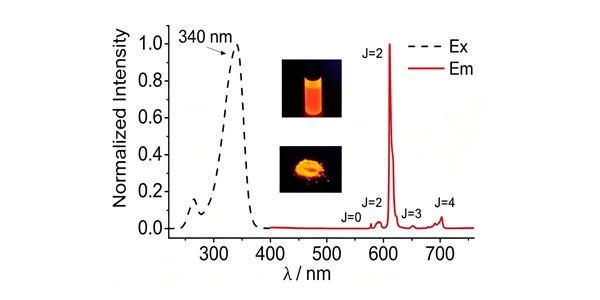

Light conversion data evaluation

The light conversion agent achieves "high-efficiency absorption of ultraviolet light + high-brightness narrow-band emission of orange-red light", with excellent light conversion performance, and has outstanding application potential in agricultural supplemental lighting and light conversion agricultural films in modern agriculture.

Transparent plate for light conversion

A transparent sheet material with both high transparency and ultraviolet-to-red light conversion is prepared by uniformly dispersing the material in a transparent sheet material through blending, coating, or sandwich processes. The sheet material absorbs ultraviolet light from sunlight and converts it into the red light band (peak value of approximately 650 nm), which is optimal for plant photosynthesis.

Converted into red light in the greenhouse

The ingenious "spectral conversion" process fundamentally optimizes the light quality entering the greenhouse through the agricultural film, significantly improves the intensity and proportion of effective photosynthetic radiation, creates a more ideal light environment for crops, and directly and effectively promotes photosynthetic efficiency and energy accumulation.

Empowering diversified modern agriculture

This red light converter is widely used in various modern greenhouses, solar greenhouses, and precision agriculture planting scenarios with high light quality requirements. Its effects are particularly significant on solanaceous crops (such as tomatoes, peppers, and eggplants), cucurbit crops (such as watermelons, cantaloupes, and strawberries), and berry crops (such as blueberries and raspberries).

  • Image
    Product Name
    Particle Size [µm]
    Ingredient
    Inquiry