

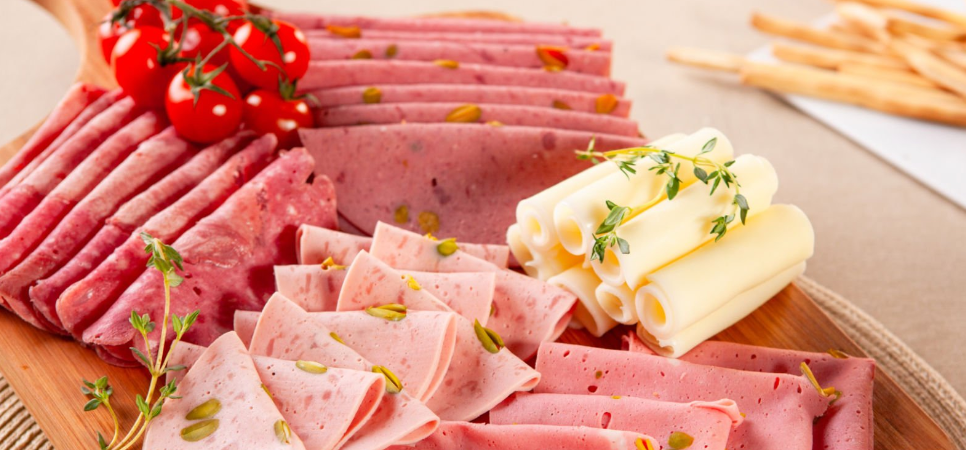
With growing consumer demand for "clean label" and healthy foods, the search for natural alternatives to synthetic additives (such as nitrites and synthetic pigments) has become a key issue for the meat industry. Lycopene, a highly effective natural carotenoid, exhibits significant potential in meat applications due to its excellent antioxidant activity and vibrant red color.
Challenges and Natural Solutions for the Meat Industry
Meat products, especially processed meats such as sausages, ham, and bacon, face two major challenges during storage and distribution:
Lipid oxidation: This leads to rancidity and off-flavors, reducing product value and potentially generating harmful substances.
Color Deterioration: Myoglobin oxidation causes the meat's color to change from bright red to a dull brown, impacting consumer purchasing decisions.
Traditionally, the industry has relied on nitrites and synthetic antioxidants (such as BHA and BHT) to address these issues. However, the potential health risks of these synthetic substances have sparked consumer concern. Lycopene, a natural pigment derived from fruits and vegetables like tomatoes, offers a "natural, nutritious, and healthy" innovative solution for meat products with its potent antioxidant capacity and captivating red color.
Lycopene's Core Functions and Mechanism of Action in Meat Products
1. An Excellent Natural Antioxidant
Mechanism of Action: Lycopene's extremely long conjugated double bonds make it one of nature's most potent singlet oxygen quenchers. It effectively captures and neutralizes free radicals generated during light and oxidation, interrupting the lipid oxidation chain reaction.
Benefits in Meat Products:
Delaying Rancidity: Significantly inhibits fat oxidation, reduces thiobarbituric acid reactant levels, and effectively extends the shelf life of products.
Preserving Flavor: Maintains the original flavor of meat products and prevents the "rancid" taste caused by oxidation.
Potential Health Benefits: Its antioxidant activity may help reduce oxidative stress in consumers, adding nutritional value to the product.
2. A Highly Effective Natural Colorant
Mechanism of Action: Lycopene itself exhibits a vibrant red color. When added to meat products, it can complement or even partially replace the color-producing function of nitrite, helping the product maintain an attractive pink to red hue.
Application Benefits in Meat Products:
Improving Meat Color: It works synergistically with myoglobin to maintain a stable red color in products like sausages and ham even after heat treatment.
Enhancing Visual Appearance: Its naturally derived color better meets modern consumers' expectations for "clean label" products.
Key Technical Points for Lycopene Application in Meat Products
Directly applying lycopene powder to meat products faces challenges with solubility, stability, and dispersibility. Therefore, practical application requires comprehensive consideration of both technology and formulation.
1. Source and Form Selection
Lycopene Oleoresin: The most commonly used form, soluble in oils and fats, facilitates uniform dispersion in meat-based products, and offers high bioavailability.
Microencapsulated Lycopene Powder: Utilizing encapsulation technology to enhance its stability and water dispersibility, it is more suitable for dry powder mixing or products with strict fat content requirements.
Tomato powder: As the most direct natural raw material, it provides lycopene while also increasing dietary fiber and other nutrients, but the active ingredient content is relatively low.
2. Application Process and Formulation Optimization
Uniform Dispersion: For oleoresin forms, it can be thoroughly premixed with the vegetable oil portion of the product. For powdered forms, it should be dry-mixed with other powdered excipients (such as starch and salt) before being mixed with the minced meat.
Synergistic Combination with Nitrite: Currently, completely replacing nitrite remains challenging (due to its antibacterial properties). A more feasible strategy is "partial replacement." Combining lycopene with lower doses of nitrite not only achieves better color development and antioxidant effects, but also significantly reduces nitrite residues, aligning with healthy consumption trends.
Avoiding Adverse Processing Conditions:
Light: Avoid direct sunlight during processing and packaging.
High Temperature: Although meat processing temperatures are relatively controllable, excessively high heat treatment temperatures (e.g., >100°C) can accelerate the isomerization and degradation of lycopene.
Metal ions: Metal ions such as Fe⁺ and Cu⁺ can catalyze oxidation, so careful consideration should be given to the selection of processing equipment.
3. Dosage Control
The amount of lycopene added is not necessarily better. Generally, adding 5-20 mg/kg of lycopene to meat products can demonstrate significant antioxidant effects. Excessive additions can increase costs and even result in unnatural color or odor. The specific dosage should be determined through experimentation based on product type and process.
Application Cases and Results
Application Case 1: Frankfurter Sausages
Solution: Add 10 mg/kg of lycopene oleoresin to the formula and reduce the sodium nitrite dosage from the conventional 150 mg/kg to 100 mg/kg.
Results: Storage experiments showed that compared to the control group containing full nitrite, the experimental group had significantly lower TBARS values, comparable color stability, and a 30% reduction in residual nitrite, successfully creating a "nitrite-reduced" clean label product.
Application Case 2: Fresh Pork Patties
Solution: 0.5% microencapsulated lycopene powder was mixed into ground meat.
Effect: Under refrigerated conditions at 4°C, the redness of the pork patties was higher than that of the unadditized group, lipid oxidation was effectively inhibited, and the shelf life was extended by 3-5 days.
Challenges and Future Outlook
Challenges:
Stability: Lycopene is sensitive to light, oxygen, and heat, requiring advanced formulation technologies (such as microencapsulation and nanoemulsions) to protect it.
Cost: The high cost of high-purity lycopene limits its use in mass-produced products.
Regulations: The scope and limits of lycopene's use as a food additive or nutritional supplement must comply with local regulations in different countries and regions.
Future Trends:
Formulation Technology Innovation: Develop more stable and bioavailable lycopene delivery systems, such as biopolymer-based nanoparticles or liposomes.
Combining with other natural ingredients: Lycopene can be combined with other natural antioxidants (such as vitamin E and rosemary extract) or colorants (such as betalain) to create synergistic effects and achieve enhanced results.
Precise and personalized applications: Develop customized lycopene application solutions for different meat products (such as poultry, fish, and red meat) and processing techniques.
As a multifunctional natural active ingredient, lycopene plays an increasingly important role in the meat industry. It not only serves as an effective alternative to synthetic antioxidants and some nitrites, slowing lipid oxidation and stabilizing meat color, but also provides added value through "clean label" and "functional enhancement." Although challenges remain regarding stability and cost, with the continuous advancement of food technology, lycopene will undoubtedly open up broader application prospects in the development of healthy meat products in the future, driving the sustainable development of the meat industry towards a more natural and healthier direction.