

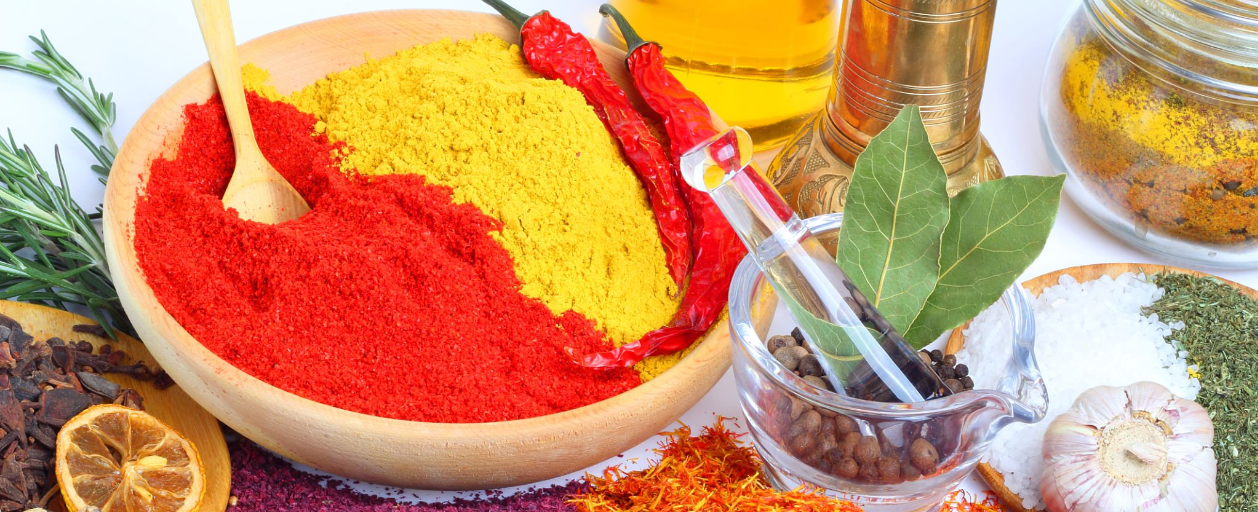
With the deepening global "clean label" movement, the food industry is undergoing a color revolution. Artificial synthetic pigments are gradually being replaced by natural pigments derived from plants, minerals, and microorganisms. These natural pigments not only impart pleasing natural colors to products but are also often associated with health benefits.
The Value and Key Challenges of Mainstream Natural Plant Pigments
1. Curcumin
Source and Color: Extracted from turmeric rhizomes, it provides vibrant bright yellow to orange-yellow colors.
Health Benefits: Known for its potent anti-inflammatory and antioxidant properties, it is a popular ingredient in functional foods.
Key Challenges: It is extremely pH-sensitive and quickly turns reddish-brown under alkaline conditions; it has poor light and heat resistance; and it has low water solubility.
2. Gardenia Blue/Gardenia Yellow
Source and Color: Extracted from gardenia fruit. Through enzymatic reactions, geniposide can produce the attractive gardenia blue and gardenia yellow, respectively. Combining these two can produce a wide range of green colors. Health Benefits: Gardenia itself is used in traditional medicine to clear heat and dampness.
Key Challenges: Gardenia blue is pH-sensitive (appears green at low pH); protein binding can cause discoloration; and the enzymatic conversion process required for its production requires precise control.
3. Beet Red
Source and Color: Extracted from red beetroot, it provides a beautiful purple-red to pink color.
Health Benefits: Beetroot itself is rich in nitrates and betaine, which are believed to help support cardiovascular health and athletic performance.
Key Challenges: It has extremely poor thermal stability and is generally only used in low-temperature or non-heat-processed products. It is sensitive to light and oxygen. It is most stable between pH 4 and 6, and its color darkens outside this range.
4. Anthocyanins
Source and Color: It is widely found in plants such as blueberries, purple cabbage, black goji berries, and purple sweet potatoes. Its color varies significantly with pH: red under acidic conditions, purple under neutral conditions, and blue under alkaline conditions. Health Benefits: A recognized powerful antioxidant with potential benefits for eye health and cognitive function.
Core Challenges: Strong pH dependence limits its use in broad-spectrum products; moderate heat and light resistance; and susceptibility to metal ions and antioxidants.
5. Chlorophyll/Sodium Copper Chlorophyll
Source and Color: Derived from green plants such as spinach and nettle. Natural chlorophyll is olive green, while stabilized sodium copper chlorophyllin exhibits a more vibrant emerald green.
Health Benefits: Traditionally believed to have detoxifying and wound-healing properties.
Core Challenges: Natural chlorophyll is highly unstable to light and heat, easily transforming into brown pheophytin when exposed to acid. Sodium copper chlorophyllin is a more stable derivative and is widely used.
Core Technologies and Strategies for Addressing Challenges
The use of natural pigments is inherently a struggle against their instability. Modern food technology offers a variety of solutions:
Microencapsulation: This is one of the most effective means of protecting sensitive pigments (such as betalains and anthocyanins). Through techniques such as spray drying, pigment particles are encapsulated in a wall material such as maltodextrin or gum arabic, effectively isolating them from oxygen, light, and heat, significantly extending their shelf life.
Matrix Selection and pH Control: Choosing the appropriate product matrix based on the pigment's pH characteristics is crucial. For example, anthocyanins and betalains are best suited for acidic beverages (such as juices and carbonated beverages), while curcumin can be used in neutral or slightly acidic products (such as curry sauce and ice cream).
Blending and Color Blending: A single pigment often fails to meet all requirements. Blending different pigments can create more stable colors or new hues. For example:
Gardenia blue + gardenia yellow = various greens
Anthocyanins (blue/purple) + betalains (red) = richer purple-red tones
Curcumin (yellow) + gardenia blue (blue) = green
Additives and Co-protection:
Antioxidants (such as vitamin C) can protect pigments from oxidation.
Metal ion chelators (such as sodium citrate) can stabilize anthocyanins and prevent them from reacting with metal ions. When using colorants in protein-containing products, compatibility testing is required to prevent precipitation or discoloration caused by pigment-protein binding.
Innovative Applications in Different Food Systems
Beverages:
Anthocyanins/Beetroot Red: Primarily used in acidic beverages such as juices, sports drinks, and plant-based protein beverages, providing red to purple hues.
Gardenia Blue/Gardenia Yellow: Used to create beverage concepts like "Blue Sky and White Clouds" and "Ocean Breeze," or combined with curcumin to create a green hue.
Curcumin: Commonly used in functional drinks and golden lattes.
Candy and Decorations:
All Colorants: The high-temperature cooking process of hard candies presents a significant challenge, requiring the use of formulations with the highest heat stability (such as microencapsulated colorants). Gummy candies and decorations place high demands on the water activity and stability of the colorants.
Dairy Products:
Anthocyanins: Caution should be exercised when using them in yogurt and fermented milk. While the acidic environment is suitable for anthocyanins, interaction with milk proteins may cause a slight gray-blue discoloration.
Beetroot Red: Limited to use in products such as low-temperature yogurt and ice cream. Curcumin/Gardenia Yellow: Used to flavor dairy products (such as turmeric-flavored yogurt) or cheese.
Baked Goods:
Curcumin: A good source of yellow color for cakes and biscuits, but requires controlled baking temperature and time.
Anthocyanins: Can be used in low-temperature or late-addition ingredients such as fillings and icings.
Sodium Copper Chlorophyllin: Can be used to create green pastries or specialty biscuits.
Global Regulatory Status and Application Considerations
Regulations on natural colorants vary significantly worldwide and must be considered as a priority during product development.
The EU: Approval of natural colorants is very strict, with a clear approval list (such as the E100 series) specifying the food categories and maximum usage levels for each colorant.
The US: The regulatory system differs from the EU. Some natural colors are exempt from certification, but there are specific requirements for their source and specifications.
China: The "Standard for the Use of Food Additives" (GB 2760) is followed, which lists the names, sources, and applicable scopes of permitted natural colorants.
Key Recommendation: Before product development, it's crucial to collaborate with color suppliers and regulatory experts to confirm the target market's approval of a specific color source and processing method, and to strictly adhere to the applicable scope and dosage regulations.
The application of natural plant-based pigments has evolved from simple coloring to a sophisticated art form that integrates food science, chemistry, and nutrition. Future trends will focus on:
Developing new, more stable pigment sources (such as genetically engineered high-pigment crops);
Innovative delivery systems (such as nanoemulsions and solid lipid nanoparticles) to further enhance pigment stability and bioavailability.
The deep integration of "color + function" elevates pigments beyond visual embellishment to become the core support for product health claims.
The era of natural colors has arrived, and with their unique charm and technological depth, they are redefining the visual and health experience of our plates.