

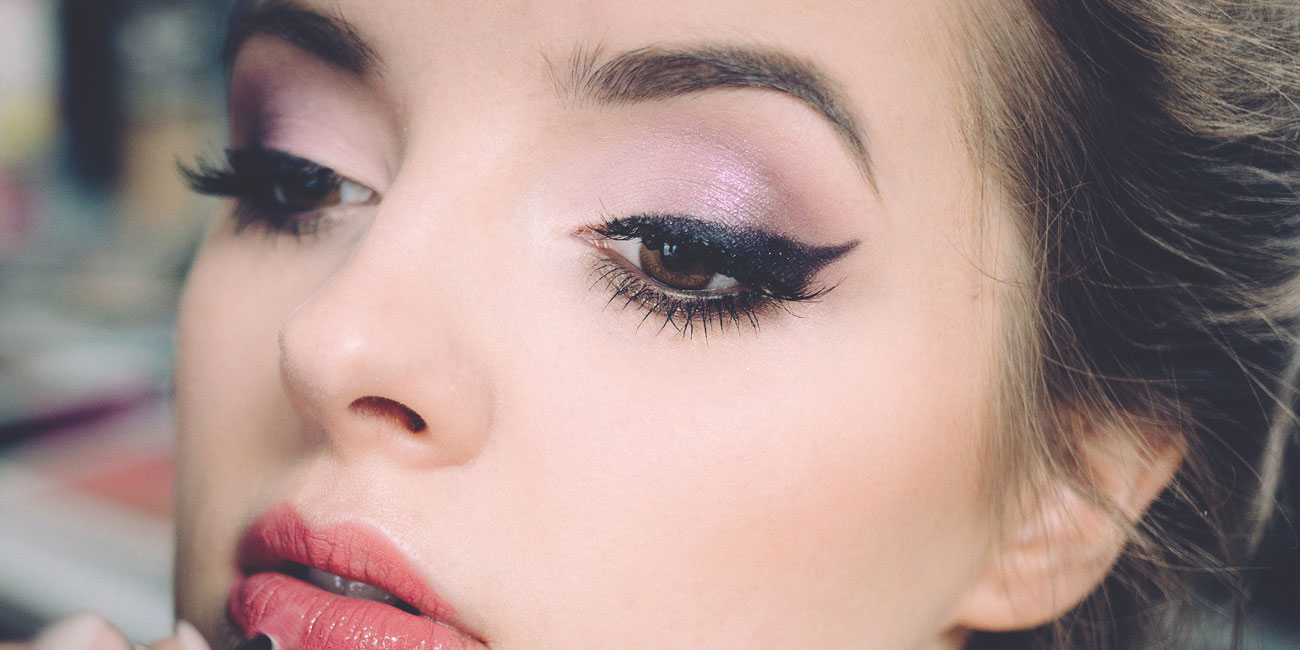
How much do you know about eye shadows commonly used in makeup?
When it comes to makeup, eye makeup is the finishing touch, and eye shadow is a very important part of it. So, what is eye shadow? What types of eye shadow products are there? What are the characteristics of eye shadows of different textures? How to choose eye shadow color? What are the precautions for using eye shadow? Let's demystify eyeshadow together.
What is eye shadow
Eye shadow products are cosmetics applied on the eyelids (ie eyelids) and the corners of the eyes. By creating shadows and tonal contrasts, they show a three-dimensional beauty, strengthen the eyes and make the eyes more beautiful and moving.
The shades of eye shadow products are the most colorful in eye cosmetics, including blue, cyan, green, brown, tea, brown, purple, etc., and others for color matching include black, white, red and yellow. The shades of eye shadow products change with the popular shades, with the trend, and should match the individual skin color, clothing, different seasons and use occasions.
Eye shadow products do not have to have very strong coverage, and their quality requirements mainly include easy smearing, no shine when smeared, and not easy to remove makeup in case of sweat.
Classification and characteristics of eye shadow products
According to the dosage form, eye shadow products can be generally divided into powder eye shadow, oily ointment and stick eye shadow, emulsified eye shadow, etc.
Powder eye shadow is the most commonly used eye shadow product. Most of the powders of various shades are pressed and formed on a small plate, and the contents of 4 shades, 6 shades, 8 shades or even 12 shades are placed in a small cosmetic box. It is convenient for consumers to carry and use. The formula composition of powder eyeshadow is similar to facial powder and powder rouge. It is composed of base pigment, white pigment, coloring pigment or pearlescent pigment, metal soap and other binders and essence, among which the content of coloring pigment is higher. Color pigments and white pigments are used to adjust the shade and coverage of the product. Matrix pigments are white pigments with less covering power, which are used to dilute the coloring pigments, make them suitable for coloring shades, and adjust the feeling of use. Metallic soaps are used to improve the adhesion of powders to the skin and to help disperse pigments in oils. When applying pressed eyeshadow, use an applicator with a sponge attached to the end of the stick or a small brush.
The formula base of oil-based ointment and stick eyeshadow is similar to that of lipstick, which is a mixture of pigment powder evenly dispersed in grease or wax base. Oil-based ointment eyeshadows generally knead the mixture and then cast it on a shallow tray for packaging. The stick-shaped eyeshadow products are classified according to the container and packaging form, and can be mainly divided into three forms: stick-shaped, pencil-shaped and crayon-shaped. Sticks come in removable containers, pencils have the wood wrapped around the core like a pencil, and crayons have paper or foil wrapping the contents. When making, the formula design should be changed accordingly according to the different use methods of rod-shaped, pencil-shaped and crayon-shaped products, and considering their bending strength. When using eye shadow cream, you can use tools such as fingers or a special sponge brush, and it should have a soft touch when rubbing. Although the popularity of eye shadow cream is not as good as that of eye shadow powder, it has better durability. Also, stick eyeshadows are more suitable for dry skin.
The formula and preparation method of emulsified eye shadow cream is similar to that of emulsified foundation cream. It is a product with emulsion or cream as the base agent and the pigment is dispersed in it. It should be noted that the matrix in which the ultramarine blue coloring pigment is added cannot be acidic. Emulsion eyeshadow is a system in which particles of several pigments and oils are dispersed in water. The architecture is complex and the performance is complex, making it difficult to maintain a stable state. Therefore, when designing the formula, various aspects such as the selection of pigments, the composition of the oil phase, the selection of emulsifying and dispersing agents, the methods of emulsifying and dispersing, and the utilization of protective colloids should be studied. Emulsified eyeshadows have the advantages of easy spreading, good adhesion, and no greasy feeling when applied, and are more suitable for oily skin, but the durability of makeup is slightly worse than that of anhydrous ones.
How to choose eye shadow color
The choice of eye shadow should be based on the skin tone of the makeup artist, the style of clothing and the occasion to be attended. Chinese women generally have the characteristics of thicker eyelids, lighter eye sockets, and yellowish skin tone, so they are not suitable for eye shadows in colors such as gold, silver and blue, which are easy to make the eyes appear bloated and the skin tone appears gray. In addition, even with yellow skin, the eye shadow color suitable for cool skin and warm skin is different. Generally speaking, oranges are more suitable for warm skin tones, while pink and purple are more suitable for cool skin. When applying eye shadow, dark eye shadow can be applied to the end of the eye and the depression of the eye socket, and bright eye shadow can be applied to the brow bone to increase the brightness and make the eyes more three-dimensional.
Beware of eye shadow contamination
In order to ensure the safety of the product, when producing eye shadow products, strict hygiene supervision and management should be carried out in terms of the selection of raw materials, the manufacturing process, the production and design of packaging containers, etc. Among them, in terms of raw material selection, the disinfection and sterilization of powder is very important, and the method of radiation sterilization is relatively simple. It should be noted that some preservatives with strong bactericidal power are allowed to be added to eye cosmetics. Therefore, people with sensitive eye skin should use it with caution.
Although eye shadow products are only used on the lids and corners of the eyes, they are likely to come into contact with or fall into the eyes, which can cause inflammation in the eyes if microbial contamination exists. According to the statistical research data on microbial contamination of cosmetics, the contamination rate of eye cosmetics is relatively high, especially the auxiliary tools (sponges, pens or brushes) contained in eye shadow products, which are usually put back in the original container after use, and are very difficult to be used in the process of repeated use. It is easy to cause secondary pollution. Therefore, eye shadow products have a high contamination rate after use, and fungi are easy to multiply, so attention should be paid to the method of use and the shelf life of the product. The author suggests that consumers can use disposable cotton swabs or other auxiliary tools to pick up the products to minimize the risk of secondary pollution.